


"Out of Many, One"
Look around you, and you will notice that America is a pretty diverse place. Whether it’s on your TV, in your music, in your classroom, or in the food that shapes our culture, different voices are always present. Actually, at no point in its existence has it ever not been.
From the earliest days, when European settlers arrived and lived alongside Native American nations, to the arrival of Africans during the earliest chapters of American history, to waves of immigrants from Ireland, Italy, China, Mexico, and countless other parts of the world, people of different cultures, languages, and traditions have always shared this land. Generation after generation, new voices entered the story. The country expanded west. Communities formed, blended, clashed, rebuilt, and evolved. Each era added another layer to what America looks and sounds like today.
In many ways, that idea is captured in a phrase you may have seen on coins or official seals: E Pluribus Unum. It is Latin for “Out of Many, One,” and it has been associated with the United States since 1782. Originally, it described thirteen separate colonies becoming a single nation. Over time, it came to represent something even larger. A country shaped not by one story, but by many.
And although America has always been diverse, not all of its voices have been equally celebrated or even heard.
It was not until 1976 that Black History Month was officially recognized by the U.S. government. That year, President Gerald Ford urged Americans to “seize the opportunity to honor the too often neglected accomplishments of Black Americans.” Every February since, we have taken time to reflect on those accomplishments and to recognize the countless ways Black Americans have shaped our history, our culture, and our future.
We do this because it matters. Because a nation built from many voices should listen to all of them.
As Scouts, this idea connects directly to the values we promise to live by. Being respectful means treating everyone with kindness and dignity. Being courteous means listening, not just speaking. Being trustworthy and loyal means standing up for others and honoring their stories, even when those stories were ignored for far too long.
Recognizing Black history is not just about the past. It is about keeping our promise to build a better future, one where every voice is heard, every contribution is valued, and “Out of Many, One” truly means all of us.
Upholding the Values of Scouting
Scouting teaches that leadership begins with respect. Respect for others, for community, and for the responsibility we share with one another. Black History Month reinforces those lessons by inviting Scouts to look beyond their own experiences and consider how history, opportunity, and perseverance shape real lives.
For Scouts, this is not an abstract idea. Learning about different perspectives helps young people:
-
Develop empathy and emotional awareness
-
Build stronger relationships within diverse teams
-
Practice listening before stepping into leadership
-
Understand that service carries a deeper meaning when it is grounded in understanding
These skills matter just as much as first aid or navigation. They shape how Scouts show up for their troops, their units, and the communities they serve. Over time, they help turn good intentions into meaningful action.

Moving Beyond History Books
Black History Month is often associated with lessons from the past, but in Scouting, it is just as much about the present.
Scouts live and serve in diverse communities. Their classmates, neighbors, teachers, and fellow Scouts all bring different experiences into the spaces they share. Taking time to learn about Black history helps Scouts better understand the world they already live in, not just the one they read about.
This kind of learning does not require complex lectures or uncomfortable debates. It begins with curiosity, honesty, and age-appropriate conversation, values that Scouting already encourages every day.
When leaders model thoughtful engagement, Scouts learn that asking questions, listening with respect, and taking time to reflect are strengths, not weaknesses.
Ways Units Can Engage With Purpose
Black History Month activities are most meaningful when they feel intentional and connected to Scouting’s mission, not added as a box to check or a theme of the week. When learning is rooted in real values and real experiences, it becomes part of how Scouts understand leadership, not just something they observe from a distance.
Learn With Intention
Units can explore Black history through stories of leadership, creativity, problem-solving, and service. Focus on themes Scouts already recognize such as perseverance, teamwork, innovation, and courage, rather than trying to cover everything at once.
For younger Scouts, this might mean reading short biographies, watching brief videos, or having simple group discussions about people who made a difference. For older Scouts, it could involve deeper research, presentations, or conversations connected to citizenship, ethics, or leadership development.
The goal is not to memorize dates. It is to understand how real people faced challenges, made choices, and worked toward change.
Lead Through Service
Service is one of Scouting’s most powerful teaching tools. February offers a natural opportunity to connect service projects with learning by supporting local cultural organizations, libraries, museums, schools, or community groups.
Service reinforces the idea that honoring history is not passive. It is something you live out through action. When Scouts give their time and effort, they learn that respect is more than words. It is participation, contribution, and care for the people around them.
Create Space for Reflection
Scouts benefit from having space to talk about what they have learned, not to arrive at perfect answers, but to practice thoughtful conversation. Leaders do not need to be experts. Creating an environment where questions are welcome and listening is valued is often more important than having every response ready.
These moments build confidence, communication skills, and mutual respect within the unit. They also teach Scouts that growth often comes from reflection, not just instruction.
Tie Learning to Advancement
Many Black History Month activities naturally support advancement requirements tied to citizenship, leadership, service hours, and personal development. When learning connects to progress, Scouts begin to see that understanding others is not separate from success. It is part of becoming a stronger leader, a better teammate, and a more responsible citizen.

Inclusion Strengthens the Movement
Scouting thrives when every family feels welcome, and every Scout feels seen. Black History Month offers a moment to reflect on how inclusion shows up, not just in what we say, but in what we do every day.
Inclusive Scouting is built through small, consistent actions:
-
Making sure activities are accessible and welcoming to all
-
Valuing different perspectives during discussions and planning
-
Encouraging leadership opportunities for every Scout
-
Creating a culture of respect that extends beyond meetings and events
When Scouts experience inclusion firsthand, they begin to understand how powerful it is. They learn not only how to belong, but how to help others feel that same sense of belonging. Over time, those lessons shape how they show up as leaders, teammates, and members of their communities.
Preparing Scouts for the World They’ll Lead
The goal of Scouting has never been simply to produce skilled campers or badge earners. It is to prepare young people to make ethical and moral choices throughout their lives.
Black History Month supports that mission by helping Scouts better understand the people and communities they will one day lead, serve, and stand alongside. It reminds them that leadership is not about having all the answers, but about understanding the people affected by the decisions they make.
Leadership in the real world requires awareness, humility, and a willingness to learn from others. These qualities do not develop overnight. They are built through exposure to different experiences, thoughtful conversation, and a commitment to listening before acting.
When Scouts take time to learn about history, especially histories that were overlooked or ignored, they begin to see leadership as responsibility, not authority. They learn that progress often comes from collaboration, that strong teams depend on trust, and that real impact starts with understanding.
February offers a natural opportunity for Scouts and leaders to practice these skills together. Not just by learning about the past, but by shaping the kind of leaders they want to become in the future.
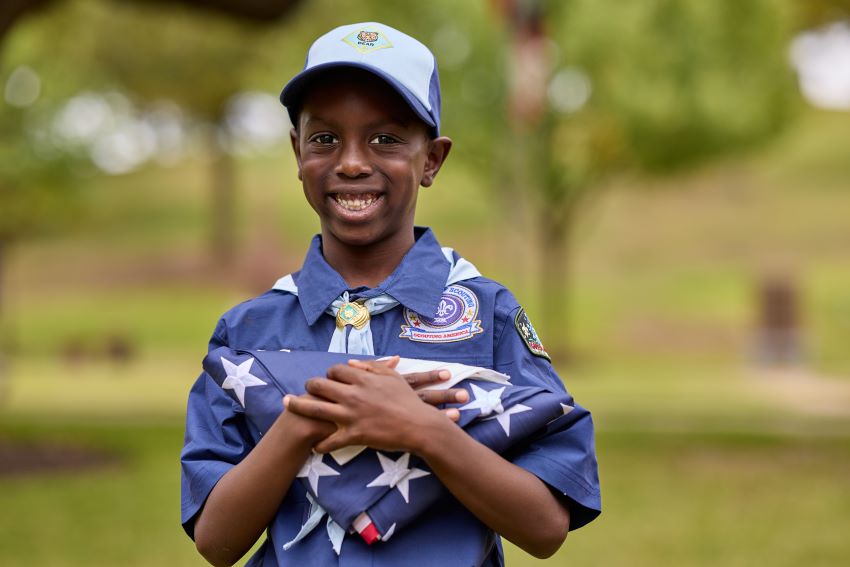
Living “Out of Many, One” Every Day
While Black History Month takes place once a year, its lessons extend far beyond February. Learning, respect, and service are not seasonal values in Scouting. They are foundational ones.
By engaging thoughtfully during this month, Scouting units reinforce a broader commitment. To build character that is informed. Leadership that is compassionate. Citizenship that is active and responsible.
That is Scouting at its best. Not just remembering history, but using it to shape better leaders for the future.
